Showing posts with label colleges. Show all posts

Monday, February 22, 2010

Lessons Learned: My Portfolio

Like a lot of my school, college and university clients I know I need to get the word out about the great things that are happening in my business. But I'm often so busy living the story that it's a challenge to make the time to tell it.

For the last year, I've wanted and needed to add a portfolio feature to my web site to showcase the projects I've been working on. At the same time, I've been striving for more regular blog posts. Inconsistent posting can kill even the best of blogs and mine has been idling for a month as I've been traveling, presenting, and creating the work.

Solution: Each of my next 10 to 12 posts will feature one of my projects. By the end I'll have my work up and out for all to see and I will have fueled my blog.

Each project will focus on a lesson learned -- key insights that become part of AJ's School of Thought.

Photo by StreetFly JZ

Friday, January 15, 2010

Institutions, Don't Waste Your Time

Tomorrow I will attend a friend's funeral. She was 40 years old and leaves behind three little girls under five. It's heartbreaking to all who knew her. At the same time I am working with a college readying itself for a major event in its institutional life. Dozens of members of this community have been drawn together to craft a great occasion. Yet during the last several months I've seen time and talent wasted in campus intrigues.

We tell ourselves campus politics go with the territory but they don't have to. When I think about the energy my friend's community generated to sustain her life, to encourage and nurture her children and to comfort and inspire one another over the last year and a half, I am in awe of the power of our collective energy.

Schools, colleges and universities are brilliant energy sources. Let's not waste our time on the insignificant.

Photo credit

Monday, January 4, 2010

ROI is not Materialism

The New York Times recently featured a story on making college “relevant.” The basic premise is that colleges have gotten wise to the fact that students and their parents see a connection between going to college and their ability to earn a living. (Imagine that!) A connection that has been both obvious and debated for decades.

The difference between this piece and so many others I’ve read is that it does not include an impassioned faculty member arguing that the only “correct” reason for attending college is to be an educated human as opposed to the crassness of getting a job. Rather the premise of the piece is that colleges and universities have decided if you can’t beat ‘em join ‘em, axing philosophy departments in favor of “anything prefixed with ‘bio’” because students have “wealth as a goal” as opposed to “developing a meaningful philosophy of life.”

“The shift in attitudes,” the article’s author writes, “is reflected in a shifting curriculum.” One could easily get the idea that more mercenary students are pushing cash-strapped institutions to change their curricula. But the article leaves out some very important context.

The source cited for more money-conscious students is UCLA’s national survey of college freshman, the largest and longest-running survey of American college students. (It started in 1966.) The same survey also found that the most important belief among entering freshman is in raising a family and that "the importance of helping others” is the highest it has been in 20 years.

As John H. Pryor, director of UCLA's Cooperative Institutional Research Program’s which conducts the survey has said, “It would be simplistic to view today’s college students as materialistic because they feel it is important to be well off financially. In fact, students are also very interested in raising families and helping others, both of which are accomplished with greater ease if one is well-off financially.”

Another point of context is that the survey has also revealed that more students report they will get a job in order to cover college expenses than at any time during the 32 years this question has been asked. In addition they are more likely to use their own money to help pay for college than in years past and they are less likely to matriculate at their first choice college because of financial considerations.

With money and earning ability front and center leading up to and during a student's college years, it's no surprise that, as the article states, “Even before they arrive on campus, students — and their parents — are increasingly focused on what comes after college. What’s the return on investment, especially as the cost of that investment keeps rising? How will that major translate into a job?” But this doesn’t mean that “jobs and making money have replaced learning” as one sarcastic Twitterer commented about the article.

As a writer and communications consultant to colleges and universities, my job is to answer the question, "What makes hefty tuitions worth it?" I got into this business because I am a true believer in the power of education (from studying philosophy to bio) to change lives for the better. When students invest as much as $200,000 for that education, by necessity a better life better include being better off.

Photo Credit

Tuesday, December 1, 2009

3 Mistakes Alumni Magazines Make

Want your alums to read more than class notes? Here's some advice from Swarthmore College's award-winning alumni magazine editor, Jeff Lott.

Jeff chaired the CASE Annual Publications Conference in Pittsburgh this year. After seeing him in action during a fast-paced critique session he calls "Triple Play" I asked him to write this guest post.

From Jeff:

One of my favorite sessions at the conference was an America-Idol version of publications critiques in which a panel of three experts is given just three minutes to offer some cogent criticism of a publication submitted by a member of the “studio audience.”

The beauty of Triple Play is that your school’s piece is under the gun for just 180 seconds. In reality, you don’t have that much time to impress your actual audience before your publication is headed for the recycling bin. A lot of the publications we saw were magazines with three common problems.

Design Overload.
This is not a new criticism, but today’s designers have way too many tools at their fingertips—a hundred fonts, a thousand graphical elements, a million ways to layer more images, colors, and information onto a page. Some can’t resist what I call exponential design: “If something looks good, square it.” Cut it out! Readers of teen tabloids will pore over these kinds of pages. But your educated, college-graduate audience needs a break. Calm, quiet design coupled with cool, easy-to-comprehend editorial will give them a chance to think.

Editorial Hierarchy.
A number of magazines ignored the following reality: Almost no one reads your carefully written articles, no matter how good they are. Research shows that only 10 percent of readers make it past the first paragraph of your body copy. So how can you get your message across? Most of us are skimmers—it’s how we cope with the flood of information we’re bathed in every day. So, if you’re designing or editing a magazine, tell your story through the following hierarchy:
  • Catchy headline with an active verb (avoid gerunds)
  • Summary subhead that, if it’s the only thing readers take-away, tells the story
  • Crunchy, fact-filled callouts that help fill in the details
  • Captions that don’t just name who or what’s in the picture, but tell something about them or it
  • Short, engaging sidebars, lists, and charts that provide additional entry points to the story
  • Last and least—the story itself

Magazine Architecture.
Go to a good newsstand and buy 25 different consumer magazines—from The Atlantic to The Bark, from Smithsonian to People. It will cost you about a hundred bucks. Back at the office, pick them apart. What are the common organizational elements? You’ll find that there’s a standard architecture to great magazines, just as there is to great buildings. And if you deviate too much from the expectations of readers—the conventions set by the magazines that they actually pay to read—you do so at your peril. Whether you start reading a magazine from the back or the front, architecture matters. Too many institutional magazines ignore the defining details that make readers comfortable, risking the impression that your publication is not a “real” magazine. To be taken seriously, you must be real.

If you would like help with any of these concepts Jeff has kindly offered to receive questions via email at jeffrey.lott@gmail.com

Photo Credit

Friday, October 23, 2009

What a Little School Can Teach Higher Ed

Andrew Careaga wrote a wonderful post this week about the future of higher education in the U.S. A must-read. Interestingly, Andy's "4-Step Prescription" -- Put students first; Make innovation the norm; Invest in our future; Worry, but not too much -- is precisely the way an independent preK-12 school I visited last week has gone about reinventing itself.

Twenty years ago it was on the verge of collapse. Then a Harvard-educated Southern entrepreneur saved it. His innovation and entrepreneurialism have become part of the school's ethos. The teachers, the administrators, the kinds of families who are attracted to the school embody it. This ethos has led to students being at the center of everything the school does. As a result, the faculty has become expert at differentiated learning — acceleration, enrichment, remediation, style. I kept asking, "How do you do all this so well?" The answer from parents, teachers and administrators always came back to putting students first.

The school's entrepreneurial savior and others pumped a ton of money and resources into it — investing in its future. These resources and a willingness to be innovative are what have allowed the school to put students first -- hiring great teachers, embracing new technologies and best practice pedagogies. Their entrepreneurial ethos enables them to be strategic and nimble all for the sake of their students.

In just two decades this independent school is better run and more successful in terms of student experience and outcomes than many of the other schools I’ve seen that have been around for more than a century.

Students first, innovation as the norm, investment in the future -- I've seen it in action and it works.

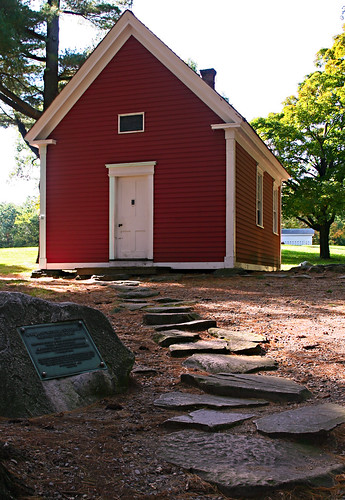
Little Red School House Image Credit


Friday, October 2, 2009

Forget Your Elevator Speech

Here’s a theory I’d like to test with you: The old idea of an elevator speech – a pitch you can deliver to someone summing up what’s great about an institution in the time it takes to ride an elevator – doesn’t work.

It’s the summing up part that is misguided. Here are two reasons why:
  1. Your listener doesn’t want to be pitched.
  2. Your listener can’t absorb and won’t remember a whole elevator speech.

Most listeners do, however, want to be intrigued, inspired or enlightened. So, when you have the opportunity to talk about your institution try this instead. Rather than attempting to sum up what’s great about your institution, give your listener one compelling fact or statement that makes them think “wow.”

Here are a few intriguing statements that apply to some of the institutions I work with:
  • Even the presidents of other universities say this university does undergraduate education better than any place else.
  • It’s one of the only women’s colleges ranked among the top 25 by U.S. News & World Report.
  • It’s one of the best places in the country to do undergraduate research.
  • You can graduate debt free and earn two Ivy League degrees for the price of one.
  • That one small campus is the birthplace of blogging, hypertext, and the technology behind online shopping – and it’s a liberal arts college!
  • It’s been ranked one of the top colleges in the country and one of the most beautiful – they say brains and beauty come together there.

My theory is these intriguing statements are short enough and powerful enough to be remembered and better yet, repeated. I also think they are more likely to engage your listener in wanting to know more.

As the conversation continues you can deliver more wow statements, eventually enlightening them on all the points you might have included in an elevator speech. Only with this approach they want to listen to you and you’re summing up what’s great about your institution in a way they’re more likely to remember.

It’s a theory I’ve been trying with some success. I’d love to hear how it works for you.

Wednesday, September 23, 2009

Tier Jumping: How Do Colleges Do It?

One of my clients recently fulfilled a long-term ambition: jumping to the top tier of the U.S. News rankings. Being part of the top 25 reminds me of the difference actors talk about after they win an Oscar for the first time. It doesn't make their lives magically perfect. The general public isn't always even aware of the win. But their peers pay them more respect and they get offered more and better roles.

Similarly, I have spoken with college presidents whose institutions have made a jump to or within the top tier. They say flat out it has made all the difference – they get more respect from peers and feeder high schools (sometimes begrudgingly) and they have more and better students knocking at their door.

So how does an institution tier jump? If I look at the clients I know firsthand and the institutions I’ve watched from afar it seems to come down to a simple but hard-to-achieve formula:

Selectivity: As one president told me, we just stopped taking some students. That made some of our alumni unhappy and it made some of our feeder high schools unhappy. For that particular institution the gamble paid off because of the next ingredient – money.

Money: At the risk of stating the obvious, to be selective, institutions need the resources to provide significant financial aid, to attract top faculty, and to build distinctive programs. As a leader of another college that has made the jump told me, “None of this could have happened if it weren’t for very strategic donors who saw the importance of investing their time, money and energy in strengthening areas of the college that would move us forward and make us what we are today."

Abandoning Generic: The tier-jumping college mentioned above used to talk internally about being a college on the move. But how did it know where it was going? How did it attract and capitalize on strategic philanthropy to arrive in the top tier? By abandoning the idea of competing on generic excellence.

If there is a formula for tier jumping this is certainly the trickiest part. Being among the top tier of colleges or universities bestows generic prestige and reputation on an institution. But in order to earn that generic reputation for excellence, the first step is carving out a specialty. As one college president who has been at a top tier liberal arts institution and is now at another liberal arts college trying to make a tier leap says, “Every successful institution has an identity, brand if you will – something readily identifiable that marks what is unique to it. For us, that is a combination of mission and place (the college is in a very dynamic city). That brand is, in part, a way to become known and to attract interest from students and from donors. In both these areas, the efforts we have made to connect mission to place have already paid off.”

As this president knows, while students and donors are essential to making a transformational leap in prestige and reputation, successful branding is the springboard that comes first. Next week, I will be talking with my tier-jumping client about how their generic seal of approval from US News is one more element in what must continue to be a very non-generic brand.

Wednesday, April 15, 2009

Ask Better Questions

I collect good questions. I've gotten them from StoryCorps, Teri Gross, Deborah Solomon, creative writing exercises, and colleagues, and interview subjects themselves.

One of my favorite parts of the job I do is to "discover" a school's* story. While focus groups with students, teachers, alumni, and parents are de rigeur in my line of work that doesn't mean all focus groups are created equal. To tell a school's story i.e. market a school in a non-generic way you have to ask questions that will get past the similarities between schools. You have to ask questions that will reveal what is compelling about that particular school's programs and culture.

That means asking questions I don't already know the answers to. If I ask, "What makes this school special?" Nine times out of ten, a student will say "the people," which gets me nowhere. But if I ask, "What impresses you about this school?" the answers are not only more specific to the school but are often different for each of the individuals in the focus group.

I have some tried and true questions. My favorite is asking faculty and school leaders, "Where do this school's ambiguities lie?" It always gives me gold in terms of revealing an institution's particular culture and any communication challenges that exist. But I'm also on the look out for new questions.

When I saw Seth Godin's "FiveTips for Better Online Surveys," I immediately wondered if they applied to in-person interviews and focus groups as well. Indeed, they do. "Make the questions entertaining . . .Boring surveys deserve the boring results they generate" is a good example. You want to ask questions that are intriguing and fun. "If this school didn't exist, would it need to be founded today?" falls under the intriguing category for most teachers and school leaders. "What's your favorite place on campus and at what time of day?" always brings a smile to students' and teachers' faces.

One of my all-time favorite questions came from an article I read about Anna Deavere Smith helping emergency room doctors ask better questions of incoming patients. The question was simply, "What happened to you?" I don't ask it just like that, but that question underlies many of the questions I do ask. If I can get a student to tell me what happened to them (what did they learn about themselves and about the world, who did they meet, how have they changed and why is that meaningful) at a particular school, I'm on my way. After all "what happened" is the plot in any good story.

*In this blog "school" refers to independent schools, colleges, and universities.

Friday, April 10, 2009

Friday Favorite. (weekly featured link from me to you)

Whenever I need the equivalent of a change of scenery before getting back to the project at hand, I head to The Daily Beast's Buzz Board. It's my favorite of all the sites claiming to offer the inside scoop on what's cool. The best part is the truly eclectic mix of notable folks passing along their recommendations for everything from mascara to art exhibitions, causes, getaways, novels, philosophers, and films. After checking out the Buzz I feel like I've had a refreshing walk around the block. Buzz Board is updated daily so I can usually find at least one to several new items during each visit.

So what does this have to do with schools and colleges? A university president from a well-known institution is a perfect candidate to buzz. Who wouldn't want to know what the president of Carnegie Mellon, NYU or Penn is reading? Schools with famous alumni and parents, who are big fans of the institution, can consider pitching those purveyors of taste to buzz about a favorite campus gallery, rare book collection, team, course or program.

Whether buzzer or buzzed, I'd love to see schools and colleges as part of the Buzz Board mix.

Wednesday, April 8, 2009

College Media Coverage: The More the Merrier?

Given the media's insatiable interest in college admissions, has it gotten easier to pitch higher ed stories?

From 1992 to 1997, I was the director of communications for Scripps College. My big media coup at the time was riding the wave of "the Hillary factor." Hillary Clinton had just become First Lady and the fact that she'd gone to Wellesley boosted the popularity of women's colleges significantly. Scripps, the women's college of The Claremont Colleges, wound up in Newsweek, Glamour, and featured on The Jane Pratt show. It was a big deal because back then colleges weren't big news, especially small liberal arts colleges.

So, I began to wonder what it's like for college PR folks these days when media outlets like the New York Times and Daily Beast now devote huge amounts of space to college stories. Jodi Heintz, director of public relations, at Lewis & Clark College in Portland, Oregon, gave me this insight:

"I think the media is very interested in telling a certain kind of story about higher ed. Generally, it is true that because of the bad economy local and national reporters are actually beating down the doors of colleges looking for stories and people to interview. The bad news, in my opinion, is that they are only interested in telling one story -- the story of how bad everything is. They are singularly interested in covering crisis -- falling applications numbers, or conversely, overwhelming application numbers, endowment catastrophes, hiring freezes or lay offs, tuition increases, etc."


Heintz recalls one New York Times article about liberal arts college admissions deans wringing their hands over drops in applications. The article only briefly mentions at the end that, at one such dean's college, it was still their third-highest year in total number of applications.

She says that while she has indeed seen an increase in the number of reporter inquiries from the top media outlets, she's actually chosen not to respond.

"I'm concerned that collectively we are feeding the frenzy. I understand that many colleges are facing difficult circumstances but there are far more nuanced stories to tell about the economic challenges. And, I'm sure we PR professionals in higher ed could do a better job of educating reporters and helping shift the conversation and coverage."

Monday, April 6, 2009

Diving In

I keep telling school and higher ed colleagues that the only remedy for their anxiety about social media tools is to dive in and start using them. But diving in also means you're going to have some belly flops along the way. For me, someone who really wants to "do it right," those flops can sting. Little things have tripped me up: not realizing that I had to put a space after "retweeting" on Twitter so that the person I quoted would see the message as well RT@bobjohnson for example. Not knowing that the comment I posted to a blog and then pointed others to would not appear until the owner of the blog okayed it. Not adding tags to blog posts to increase the chances that anyone would see them much less read them. Tethering my Facebook and Twitter updates and then not knowing how to untether them. The result being several erroneous and irrelevant updates on both sides. All of these are minor slips along my learning curve. No doubt there will be more.

I still vividly remember the day I learned to dive as a kid. Lots of belly flops, but I wouldn't let it go until I got it. Then once I had the hang of it, all I wanted to do was dive in again and again. With social media it's the same feeling for me just a different pool.

Photo: Mike Warren