Showing posts with label independent schools. Show all posts

Friday, October 22, 2010

Join Me at TABS 2010 (Baltimore December 3-4)


Here's why you should go. Here is who you will meet and hear. Here are a few tips to make the most of the conference (Courtesy of Chris Brogan). You can register here.

I'll be there along with Dr. Andrew T. Weller, Dean of Admissions for Canadian boarding school Ridley College, and Rob Norman and Liza Fisher Norman of Turnaround Marketing Communications.

Our session is “Canadian Hogwarts Magic: National Prestige to Global Brand”
How can a local legend break into U.S. and global markets? Start with a British system head of school, an admission dean fresh from East Coast prep schools in the U.S. and a venerable Canadian institution. Add marketing expertise and communication strategy. In this case study of Ridley College hear universal lessons on market positioning, brand storytelling, and the power of design to appeal to target markets worldwide.

Monday, October 11, 2010

Partners vs. Vendors


In case you missed my column on working with consultants in the September CASE CURRENTS, here you go. It features words of wisdom from Missouri S & T's Andrew Careaga (if you're not reading Andy's top higher ed blog already, it's a must), William and Mary's Susan Evans (many thanks to Michael Stoner for connecting me to this sage who discusses what she was looking for in a consulting partner when she chose mStoner to help develop the college's new website), CCA's Dan Kehn (undoubtedly one of the top strategist/account managers I have ever seen), George School's Odie LeFever (she has the Midas touch when it comes to working with consultants and turning out gold), and the University of Richmond's Nanci Tessier (an enrollment management star who has helped her university become the envy of peers and a first choice for prospective students and parents).

Wednesday, September 29, 2010

A Client’s Brand Primer

The best sign that branding I’ve done works is when those who live the brand really own its ideas and language and make it their own.

In terms of my own brand, I was reminded of this when Andrew T. Weller, Dean of Admission at Ridley College in St. Catharines, Ontario, Canada, told me what he tells other schools they can expect from working with me. I’ve worked on three school branding projects with Andrew (partnering with Turnaround Marketing Communications). He understands the process inside and out. He doesn’t use my language when he tells people what I do. Yet it is exactly what I hope clients get from partnering with me. His insights are a great brand primer in general.

Courtesy of Andrew Weller:

1. I assure people they are not going to be told who they *should* be or become but rather have reflected back to them who they already are.

2. I highlight the research done into other schools the client provides as well as the consulting team’s collective knowledge from experience. What’s the point in a brand someone already has?

3. I let them know that the work will distinguish between what is great about the school and what is great about the school that the market cares about. Who cares if we take pride in our plaid skirts from the 1880’s if prospective families don’t?

4. The end result will be market-friendly, market-digestible language – the school’s “insider” identity will be crafted in a way that resonates with the audience.

Read more Dr. Weller here.

Monday, February 22, 2010

Lessons Learned: My Portfolio

Like a lot of my school, college and university clients I know I need to get the word out about the great things that are happening in my business. But I'm often so busy living the story that it's a challenge to make the time to tell it.

For the last year, I've wanted and needed to add a portfolio feature to my web site to showcase the projects I've been working on. At the same time, I've been striving for more regular blog posts. Inconsistent posting can kill even the best of blogs and mine has been idling for a month as I've been traveling, presenting, and creating the work.

Solution: Each of my next 10 to 12 posts will feature one of my projects. By the end I'll have my work up and out for all to see and I will have fueled my blog.

Each project will focus on a lesson learned -- key insights that become part of AJ's School of Thought.

Photo by StreetFly JZ

Monday, January 25, 2010

Campaign Communications: 7 Steps to Move Beyond the Typical


Even before I meet with schools about campaign messaging I can guess what their fundraising priorities are. I bet you can too.

Scholarship, faculty, facilities. There’s a good reason for that. A school’s ability to meet these three needs drives its success. So how do you engage donors -- many of whom have heard it all before – in the same ol’ same ol’ priorities?

That was the challenge for Germantown Friends School, Turnaround Marketing Communications and me two years ago when the school asked us to develop its campaign communications. During its feasibility study a major donor prospect said the priorities sounded like “the typical independent school stuff.” At this year’s CASE-NAIS conference I had the pleasure of teaming up with Germantown Friends School Director of Development Sally West Williams and Turnaround Marketing Communications Principal Liza Fisher Norman to talk about what we did to move the message beyond the typical. Here’s an excerpt from my part of our session called, “From Basic to Brilliant: Not Your Typical Campaign Communications.”

For Germantown Friends it boiled down to a seven steps that I think can serve as a roadmap for any school.

1. Tap into the Human Need to Be Part of Something Bigger than Oneself
Donors are people who believe in their ability to make a difference. They give to schools because it’s an opportunity to make an impact on an issue they care about. They give to be part of something new, important or unique. They give out of loyalty and pride. All these motives equal a human yearning to be part of something bigger than oneself. Great campaigns tap into that yearning.

2. Find Your North Stars
These are the people who love and support your school and can articulate why. (I usually interview scores of people to understand a school. North Stars are the voices that stand out and tell me what makes this school different from the rest). At Germantown Friends, our guiding voices were the head of school, three donor-parents, one donor-alum, one teacher, and one legendary quote.

3. Ask Your North Stars the Right Questions
Some of my favorites: If this school didn’t exist, why would it need to be founded today? Where are the ambiguities at this school? What difference will it make to the world in 50 years if you’ve gave to this campaign?

4. Name What Sets Your School Apart (and have the proof to back it up)
In listening to Germantown Friends’ North Stars, we identified five distinguishing characteristics:

Germantown Friends . . .
  • Is a “Niche” School
  • Has a Vibrant Culture of Intellectual and Creative Ambition
  • Is a Daring 21st Century Urban School Model
  • Is a “National Treasure”
  • Is a Catalyst of Hope, Interconnection, and Positive Impact

5. Match Your Campaign’s Tone and Approach to School Culture
While campaigns raise money for the same thing, school cultures are vastly different. Is your school culture bold, proud, thrifty, intellectual, entrepreneurial?

In Germantown Friends’ case, we knew we had to balance ambition with the school’s traditional restraint when it comes to fundraising.

6. Make Your School’s Story Your Campaign’s Story
Using your “what sets you apart” messages, translate the typical three-part every-school campaign to a unique and exciting philanthropic call to action. Germantown Friends’ daring, its Quaker values of social action for the good of its community, its sense of equality – that you don’t have to be rich to make a difference and be counted – led me to think about social entrepreneurism and a micro-finance model where the collective energy of many individuals could make a huge impact. The result was an unpacking of the usual three-part campaign into seven projects that together fuel a national treasure.

The Germantown Friends School Voices for the Future Campaign Call to Action:
7 Projects to Change the World
  • Fueling a National Treasure Endowment
  • Extraordinary Teachers Endowment
  • Faculty Innovation Endowment
  • Sustainable Urban Science Center
  • Middle-Income Family Tuition Relief (Later became Access and Affordability Financial Aid Endowment)
  • Community Scholars Program
  • GFS Generations Fund (The emphasis was on all generations participating in the annual fund, particularly young alumni. Later became simply GFS Annual Fund.)

7. Make Your Case Tangible, Doable, Fun
While the campaign message needs to be inspiring and lofty, it also needs to be practical and fun. When I wrote the Germantown Friends case I thought of the leave behind piece as a social entrepreneurism catalog – an approach that seemed fitting for a school whose donors are not ostentatious and have an ethos of bettering the world. The “fun” for this school is the ability to actually make a difference no matter how large or small the gift.

To date, the school has raised sixty-five percent of its goal and donors have accelerated pledges and turned bequests into outright gifts even in challenging times. Sally West Williams told session attendees that when the economy took a nosedive what made all the difference was the fact that the campaign’s priority had moved from typical stuff to the specific magic of Germantown Friends School.

Photo Credit

Friday, January 15, 2010

Institutions, Don't Waste Your Time

Tomorrow I will attend a friend's funeral. She was 40 years old and leaves behind three little girls under five. It's heartbreaking to all who knew her. At the same time I am working with a college readying itself for a major event in its institutional life. Dozens of members of this community have been drawn together to craft a great occasion. Yet during the last several months I've seen time and talent wasted in campus intrigues.

We tell ourselves campus politics go with the territory but they don't have to. When I think about the energy my friend's community generated to sustain her life, to encourage and nurture her children and to comfort and inspire one another over the last year and a half, I am in awe of the power of our collective energy.

Schools, colleges and universities are brilliant energy sources. Let's not waste our time on the insignificant.

Photo credit

Tuesday, December 1, 2009

3 Mistakes Alumni Magazines Make

Want your alums to read more than class notes? Here's some advice from Swarthmore College's award-winning alumni magazine editor, Jeff Lott.

Jeff chaired the CASE Annual Publications Conference in Pittsburgh this year. After seeing him in action during a fast-paced critique session he calls "Triple Play" I asked him to write this guest post.

From Jeff:

One of my favorite sessions at the conference was an America-Idol version of publications critiques in which a panel of three experts is given just three minutes to offer some cogent criticism of a publication submitted by a member of the “studio audience.”

The beauty of Triple Play is that your school’s piece is under the gun for just 180 seconds. In reality, you don’t have that much time to impress your actual audience before your publication is headed for the recycling bin. A lot of the publications we saw were magazines with three common problems.

Design Overload.
This is not a new criticism, but today’s designers have way too many tools at their fingertips—a hundred fonts, a thousand graphical elements, a million ways to layer more images, colors, and information onto a page. Some can’t resist what I call exponential design: “If something looks good, square it.” Cut it out! Readers of teen tabloids will pore over these kinds of pages. But your educated, college-graduate audience needs a break. Calm, quiet design coupled with cool, easy-to-comprehend editorial will give them a chance to think.

Editorial Hierarchy.
A number of magazines ignored the following reality: Almost no one reads your carefully written articles, no matter how good they are. Research shows that only 10 percent of readers make it past the first paragraph of your body copy. So how can you get your message across? Most of us are skimmers—it’s how we cope with the flood of information we’re bathed in every day. So, if you’re designing or editing a magazine, tell your story through the following hierarchy:
  • Catchy headline with an active verb (avoid gerunds)
  • Summary subhead that, if it’s the only thing readers take-away, tells the story
  • Crunchy, fact-filled callouts that help fill in the details
  • Captions that don’t just name who or what’s in the picture, but tell something about them or it
  • Short, engaging sidebars, lists, and charts that provide additional entry points to the story
  • Last and least—the story itself

Magazine Architecture.
Go to a good newsstand and buy 25 different consumer magazines—from The Atlantic to The Bark, from Smithsonian to People. It will cost you about a hundred bucks. Back at the office, pick them apart. What are the common organizational elements? You’ll find that there’s a standard architecture to great magazines, just as there is to great buildings. And if you deviate too much from the expectations of readers—the conventions set by the magazines that they actually pay to read—you do so at your peril. Whether you start reading a magazine from the back or the front, architecture matters. Too many institutional magazines ignore the defining details that make readers comfortable, risking the impression that your publication is not a “real” magazine. To be taken seriously, you must be real.

If you would like help with any of these concepts Jeff has kindly offered to receive questions via email at jeffrey.lott@gmail.com

Photo Credit

Friday, November 13, 2009

Word-of-Mouth and Storytelling

How do you prepare your chief storytellers? How do you take advantage of the natural storytellers within your leadership? How do you help everyone to be on story, even if it doesn’t come naturally to them?

These are the questions the director of communications at an independent girls’ school says he's been thinking about lately. “One of the things I’ve come up against is the idea of prepping people to ‘tell’ stories, not just to write them,” he told me last week.

A few years ago, before Facebook, Twitter and YouTube defined the way we think about stories moving from person-to-person, I wrote a piece on word-of-mouth marketing campaigns. Turns out it’s a recipe for face-to-face storytelling. Here's an excerpt with the best of the advice.

Story First, Brand Second
Mark Hughes, author of the book Buzzmarketing: Get People to Talk About Your Stuff, says it’s counter intuitive, but in word-of-mouth marketing the rules of engagement are story first, brand second. Good stories go viral, he says, because they are interesting and therefore make the teller interesting. “People want to be in the know. They want to start a conversation with “did you hear’ or ‘you’re never going to believe,’” he says.

According to Hughes, the same topics that get people talking also get the media writing. The five stories that appear on the front page most frequently are surefire conversation starters:
  • David and Goliath stories
  • Controversies
  • The outrageous and unusual,
  • Celebrities
  • Stories that piggyback on an already hot story
Hughes says if he were a campus communicator he would focus on the remarkable and the David and Goliath stories—“the kid who came from Bulgaria with five bucks in his pocket and won the Nobel Prize. Everyone wants to hear a story about making it.” Define the institution’s niche and find the compelling stories that exemplify that niche. “If you give [people] a good story to tell when they get together with friends at a cocktail party,” he says, “they will carry your message.”

Cocktail Talk
Denver-based public relations firm JohnstonWells’ signature program “Cocktail Talk” is designed to do just that. Cocktail Talk trains board members, staff members, and volunteers how to incorporate an organization’s messages into social conversations—not by spouting off facts and figures but by becoming good storytellers. The program begins
 with some basic branding techniques—defining an organization’s distinctions and backing them up with proof that they can then translate into a memorable acronym. But Cocktail Talk’s innovation lies in allowing participants to connect their organization’s brand attributes to their own stories.

“[As we work] through every piece of the acronym we ask them ‘Okay, tell a story that really exemplifies this point,’” says GG Johnston, president of JohnstonWells. “Incredible stories unfold—many of which participants haven’t even told each other.” The process builds internal consensus among leadership, staff, and volunteers that is critical because people seldom successfully use messages handed off to them. Rather, they communicate messages enthusiastically when they’ve had an active role in creating them. One can easily imagine how powerful such storytelling sessions could be for admissions tour guides and alumni and parent volunteers because they would have the opportunity to make an institution’s brand story their own.

When asked if volunteer participants balk at being encouraged to promote their organizations in social situations, Johnston says, “It’s not about asking people to dominate conversations with organizational messages. These are smart, busy volunteers who are passionate about where they spend their time. What happens is they gain practice talking about things that are important to them.”

Joshua Searle-White, a professional storyteller and psychology professor at Allegheny College who has taught many storytelling workshops and classes, says the one common element he finds in good stories is that they connect with some truth about the teller. “Something in the story feels important to the teller and the listener senses that,” Searle-White says. “The listener has a sense of being invited in.”

Structured for Results
That invitation is exactly the kind of opening Sametz Blackstone’s Andrew Maydoney* says is missing from a lot of today’s brand stories. “It’s probably the most important part of the story for a word-of-mouth campaign,” he says. A brand story has four parts, he says, but most institutions stop at the first one: facts and history. “They leave out how that institution differentiates itself from its competition. They leave out the institution’s value and meaning to the world. And finally, they leave no room in the story for the role that the alum, the student, the prospective donor, the post doc, or the new faculty member will play in the story.”

Maydoney worked with a liberal arts college in New England that wanted to expand the geographic diversity of its student body. The college draws students from the region and two additional areas outside New England due to a critical mass of alumni who have settled in those areas and are spreading the word. Campus leaders would like to leverage that success by accelerating good word-of-mouth. The Sametz Blackstone team met with alumni, guidance counselors, and prospective students and their families in those two areas to get a sense of what they understand about the campus. After comparing what constituents know to what institution officials hope they know, the team started writing stories aimed at alumni in target areas to help them tell an authentic but better story about the college.

Once the firm finished the research, it developed “cheat cards” delineating five easy ways to tell the story. The cards are not prescriptive, but principles-based, and they outline an exchange between storyteller and constituent that begins in “empathy” and ends in “follow-up.” For a real dialogue to build, Maydoney says, “you can’t lay out rules that don’t acknowledge everyone has his or her own way of telling stories.” Alumni of different ages will tell the story in their own vernacular, as will people from different backgrounds. “It’s not as straightforward as a publication,” he says. “You have to get out there and talk to your constituents and do some role-playing. The work is actually in the dialogue.”

While Maydoney emphasizes that word-of-mouth campaigns shouldn’t tell people what to say, they do revolve around memorable messages that people can make their own in part because constituents have helped develop them. For an education organization serving disadvantaged youth aspiring to go to college, Sametz Blackstone developed the tagline: “Get in, graduate, go far, success depends on you.” Without coaching, those affiliated with the organization began folding the messages naturally into their language. The campaign is credited with bringing coherence to the organization’s story—a coherence that doubled donor support.

*Maydoney, is no longer at Sametz Blackstone but is using his talent for storytelling as an artist.


Friday, October 23, 2009

What a Little School Can Teach Higher Ed

Andrew Careaga wrote a wonderful post this week about the future of higher education in the U.S. A must-read. Interestingly, Andy's "4-Step Prescription" -- Put students first; Make innovation the norm; Invest in our future; Worry, but not too much -- is precisely the way an independent preK-12 school I visited last week has gone about reinventing itself.

Twenty years ago it was on the verge of collapse. Then a Harvard-educated Southern entrepreneur saved it. His innovation and entrepreneurialism have become part of the school's ethos. The teachers, the administrators, the kinds of families who are attracted to the school embody it. This ethos has led to students being at the center of everything the school does. As a result, the faculty has become expert at differentiated learning — acceleration, enrichment, remediation, style. I kept asking, "How do you do all this so well?" The answer from parents, teachers and administrators always came back to putting students first.

The school's entrepreneurial savior and others pumped a ton of money and resources into it — investing in its future. These resources and a willingness to be innovative are what have allowed the school to put students first -- hiring great teachers, embracing new technologies and best practice pedagogies. Their entrepreneurial ethos enables them to be strategic and nimble all for the sake of their students.

In just two decades this independent school is better run and more successful in terms of student experience and outcomes than many of the other schools I’ve seen that have been around for more than a century.

Students first, innovation as the norm, investment in the future -- I've seen it in action and it works.

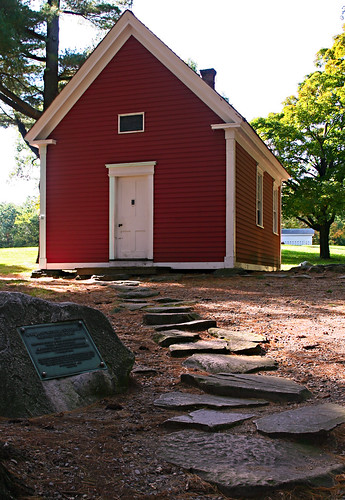
Little Red School House Image Credit


Saturday, September 12, 2009

The Frugalista School?

I've always seen a connection between fashion branding and school branding.

High fashion and elite education are both luxuries but clothes and school are necessities. If a pair of jeans can cost $14 or $400; if you can go to high school for free or for $40,000 a year, anyone selling these luxury options better be able to explain why they're worth it.

When it comes to schools, each family uses its own subjective set of scales to weigh and balance a school's prestige, cost, quality, experience and outcomes to determine if that school is worth it. By necessity a school's brand tries to weave the perfect blend of these same factors to attract its market.

For some people, prestige trumps cost. They'll go into debt to get it. For others, affordability is king. But what if you could have both? That's the allure of elite magnet schools and public honors colleges. And that's the sweet spot of the new Target "Frugalista" campaign. For several years, Target has done the seemingly impossible -- marrying cachet and low prices by bringing top designers to Target without cheapening the prestige of those designers (Anyone remember the disaster of Halston and J.C. Penny?)

But now, Target has gone further, giving its affordable prestige brand a persona -- the Frugalista. Emerging victorious from the post-2008 economic wreckage, she's just right for our times. She's a Mini Cooper not an Escalade. She believes, as Oprah declares in this month's O Magazine that small is the new big. The frugalista's sensibility is one that the marketers of elite private schools, colleges and universities should pay close attention to.

The crucial fact to note is that the frugalista is not a wannabe wearing knock-offs. She chooses not to spend more but she still wants the real thing. (Look, there's Project Runway's own Nina Garcia now loading up a red Target hand basket with frugalista chic to prove it.)

So how can schools, colleges, and universities market affordable prestige? First of all your school has to have the elements of legitimate prestige -- successful outcomes, excellent faculties and programs. Second, to be a real frugalista you have to make cost and affordability a key message. I'm working with an Ivy League institution that is marketing two degrees for the price of one and graduating debt free as part of its primary message. Another Ivy League client is heralding "the good news about cost."

Schools that are in the best position to take a frugalista approach are those that produce great outcomes but really do cost less than their competitors. I've worked with two independent schools that have superb college matriculation lists (face it, these lists matter to parents) and are priced more like parochial schools than their independent school competitors. Now is the time for schools like these to forge a single powerful message out of quality at a low price.

How does Target do it? By getting fashionistas like Nina Garcia to embrace the ethos. Schools have known for a long time if they can get one influential family to value their program more will follow. So, once you have your affordable prestige message in place, who are the frugalistas in your parent and alumni community who will spread the word?

Thursday, April 16, 2009

5 Storytelling Essentials

(Update: 5/15/09) If you are coming from The Recruitment Minute, Welcome and thanks for reading. You might also be interested in Ask Better Questions and Is It Worth Printing?

As much as we think and talk about branding and storytelling these days, we often fail to consider true storytelling elements—character, plot, dialogue, scene, place, point of view, and sensory detail. Good stories have tension and conflict. Even the heroes have flaws. So how can you persuade readers of an institution's virtues and still tell a good story?

Protagonist and plot. Every campus's brand story is a mythic archetype with mythic heroes: the revolutionary, the discoverer, the change agent. As you begin a branding process, look for the plot lines in your institution’s big story from founding to now -- plot lines that make your heart beat, that have elements of risk and excitement. Once you understand the big story, everyday heroes will reveal themselves as well: students, faculty, and alumni who live and embody the brand.

Great beginnings. Good stories open by drawing the reader in emotionally, sometimes with childlike anticipation. But even intriguing openings should act as practical "doorknobs" that, with a turn, allow the reader to enter the story's world. Some of the most effective openings can be both emotional and practical: "What matters to you?" "Coming here was like seeing the entire world all at once." "Put yourself in the way of opportunity."

Sensory details. Once the audience enters your world, you must make them experience it. Whatever the medium—text, photos, film, web—the more you get out of the way and let your audiences experience the story for themselves, the better. In the best stories, action, description, and dialogue stand on their own. They have settings and scenes you can see, touch, taste, smell, and hear.

Scene, dialogue, narration. Institutional stories require scene and dialogue just as much as compelling fiction does. Think of photos as scenes, quotes as dialogue, blogs as the internal voice of a character, institutional voice as narration. How are they working together to communicate the narrative arc of your story?

Strong finishes. Endings are just as critical as beginnings. They can resonate and reverberate in the reader's mind to project an imagined future that continues to play even after a book is closed or a film has ended. That's just the response we want to evoke in prospective students and donors—an imagined future.

Novice fiction writers typically hear that no one will ever care as much as they do if their stories get written. Accepting this harsh truth is the first step to telling a story good enough to lead to true communication. No one will ever care about our institutions' stories as much as we do. We have to make them care by telling good stories. Only then do we have a chance of making our stories theirs.

Wednesday, April 15, 2009

Ask Better Questions

I collect good questions. I've gotten them from StoryCorps, Teri Gross, Deborah Solomon, creative writing exercises, and colleagues, and interview subjects themselves.

One of my favorite parts of the job I do is to "discover" a school's* story. While focus groups with students, teachers, alumni, and parents are de rigeur in my line of work that doesn't mean all focus groups are created equal. To tell a school's story i.e. market a school in a non-generic way you have to ask questions that will get past the similarities between schools. You have to ask questions that will reveal what is compelling about that particular school's programs and culture.

That means asking questions I don't already know the answers to. If I ask, "What makes this school special?" Nine times out of ten, a student will say "the people," which gets me nowhere. But if I ask, "What impresses you about this school?" the answers are not only more specific to the school but are often different for each of the individuals in the focus group.

I have some tried and true questions. My favorite is asking faculty and school leaders, "Where do this school's ambiguities lie?" It always gives me gold in terms of revealing an institution's particular culture and any communication challenges that exist. But I'm also on the look out for new questions.

When I saw Seth Godin's "FiveTips for Better Online Surveys," I immediately wondered if they applied to in-person interviews and focus groups as well. Indeed, they do. "Make the questions entertaining . . .Boring surveys deserve the boring results they generate" is a good example. You want to ask questions that are intriguing and fun. "If this school didn't exist, would it need to be founded today?" falls under the intriguing category for most teachers and school leaders. "What's your favorite place on campus and at what time of day?" always brings a smile to students' and teachers' faces.

One of my all-time favorite questions came from an article I read about Anna Deavere Smith helping emergency room doctors ask better questions of incoming patients. The question was simply, "What happened to you?" I don't ask it just like that, but that question underlies many of the questions I do ask. If I can get a student to tell me what happened to them (what did they learn about themselves and about the world, who did they meet, how have they changed and why is that meaningful) at a particular school, I'm on my way. After all "what happened" is the plot in any good story.

*In this blog "school" refers to independent schools, colleges, and universities.

Friday, April 10, 2009

Friday Favorite. (weekly featured link from me to you)

Whenever I need the equivalent of a change of scenery before getting back to the project at hand, I head to The Daily Beast's Buzz Board. It's my favorite of all the sites claiming to offer the inside scoop on what's cool. The best part is the truly eclectic mix of notable folks passing along their recommendations for everything from mascara to art exhibitions, causes, getaways, novels, philosophers, and films. After checking out the Buzz I feel like I've had a refreshing walk around the block. Buzz Board is updated daily so I can usually find at least one to several new items during each visit.

So what does this have to do with schools and colleges? A university president from a well-known institution is a perfect candidate to buzz. Who wouldn't want to know what the president of Carnegie Mellon, NYU or Penn is reading? Schools with famous alumni and parents, who are big fans of the institution, can consider pitching those purveyors of taste to buzz about a favorite campus gallery, rare book collection, team, course or program.

Whether buzzer or buzzed, I'd love to see schools and colleges as part of the Buzz Board mix.

Monday, April 6, 2009

Diving In

I keep telling school and higher ed colleagues that the only remedy for their anxiety about social media tools is to dive in and start using them. But diving in also means you're going to have some belly flops along the way. For me, someone who really wants to "do it right," those flops can sting. Little things have tripped me up: not realizing that I had to put a space after "retweeting" on Twitter so that the person I quoted would see the message as well RT@bobjohnson for example. Not knowing that the comment I posted to a blog and then pointed others to would not appear until the owner of the blog okayed it. Not adding tags to blog posts to increase the chances that anyone would see them much less read them. Tethering my Facebook and Twitter updates and then not knowing how to untether them. The result being several erroneous and irrelevant updates on both sides. All of these are minor slips along my learning curve. No doubt there will be more.

I still vividly remember the day I learned to dive as a kid. Lots of belly flops, but I wouldn't let it go until I got it. Then once I had the hang of it, all I wanted to do was dive in again and again. With social media it's the same feeling for me just a different pool.

Photo: Mike Warren